Recycled or Abandoned? The Dark Truth About Where Britain's Old Phones Really End Up
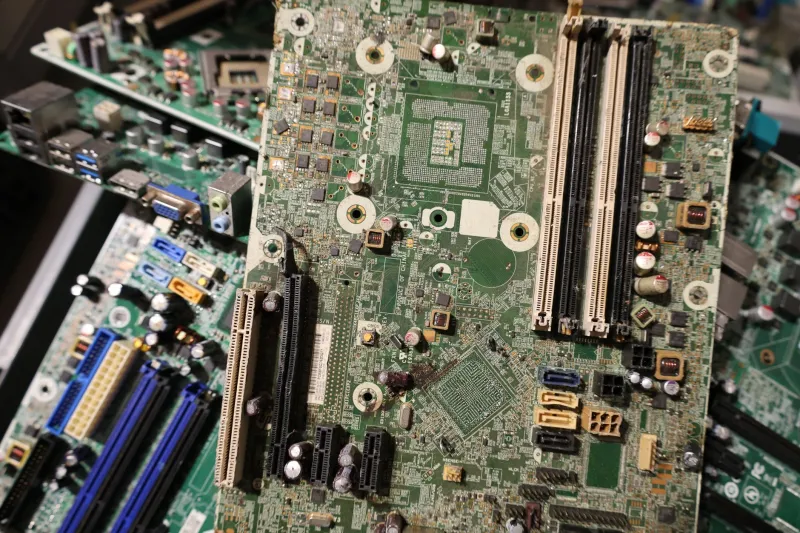
Every year, British consumers hand over roughly 40 million old mobile phones. Some go back to networks as trade-ins. Some get dropped into charity collection bins. Some are posted off to cashback recycling services. A small number go to specialist refurbishers. And a significant proportion — nobody can agree on exactly how many, which is itself telling — disappear into a global waste chain that ends somewhere very far from the neat, responsible narrative the industry likes to promote.
This is the story of what actually happens to your old phone after you hand it over. It's not always pretty.
The Recycling Promise
Walk into any major UK network store and the messaging around phone recycling is confident and reassuring. Trade-in your old handset, offset the cost of your upgrade, help the planet. The marketing language — "responsibly recycled," "certified refurbishment," "zero to landfill" — is carefully chosen to suggest a clean, well-managed process.
The problem is that most consumers never ask what those phrases actually mean, and most retailers are under no obligation to be specific. "Zero to landfill" is a legally meaningless term in the UK context. It doesn't mean your phone will be refurbished or that its components will be safely recovered. It means it won't go directly to a landfill site in Britain — which says nothing about what happens once it leaves these shores.
The Journey Begins
After collection, traded-in devices typically pass through one or more intermediary handlers before reaching their final destination. The legitimate end of this chain involves certified WEEE (Waste Electrical and Electronic Equipment) processors, who are required to meet EU-derived standards for data destruction, component recovery, and hazardous material handling. The UK retained WEEE regulations post-Brexit and has broadly maintained equivalent standards.
But the chain is long, and oversight gets thinner at each link. Investigative work by environmental groups including Material Focus and the Basel Action Network has repeatedly found that devices exported from the UK under the classification of "second-hand goods" — a legal grey area — end up at informal processing sites in West Africa, South Asia, and parts of Southeast Asia, where workers dismantle electronics without protective equipment, burning cables to recover copper and dissolving circuit boards in acid baths to extract precious metals.
The health consequences for workers at these sites — many of whom are children — are severe and well-documented. Lead poisoning, respiratory damage from toxic fumes, and contaminated groundwater are consistent findings in studies of informal e-waste processing communities.
The Classification Trick
How does a phone traded in at a UK network store end up at an unregulated overseas facility? The answer is usually the "second-hand goods" classification. Under both UK and international shipping regulations, it's legal to export a working second-hand device for the purpose of reuse. The regulations are designed to allow genuine second-hand trade — and they do. But they're also exploited by unscrupulous exporters who classify non-functional or marginally functional devices as reusable goods to avoid the stricter controls that apply to waste.
A phone with a cracked screen, a degraded battery, or a faulty charging port might technically power on, which is often all it takes to pass a cursory inspection at the point of export. Once it arrives overseas, if it can't be economically repaired in a low-cost market, it joins the informal waste stream.
Basel Action Network fitted GPS trackers inside old electronics donated to UK collection points as part of a wider study and found that a portion ended up in countries with no formal WEEE infrastructure. The UK government has acknowledged the scale of illegal e-waste exports as a significant problem, but enforcement resources are limited and the international dimension makes prosecution difficult.
Your Data: The Risk Nobody Mentions
Beyond the environmental and humanitarian concerns, there's a direct consumer risk that rarely features in recycling marketing: your personal data.
A factory reset, which is what most trade-in schemes ask you to perform before handing over your device, does not securely erase data on all handsets. On older Android devices in particular, a standard factory reset leaves recoverable data on the internal storage — something that's been demonstrated repeatedly by security researchers. Tools freely available online can recover photos, messages, and in some cases login credentials from a "wiped" device.
If your phone ends up at an informal overseas processing site, the people handling it may have no interest in your data. But if it passes through a less scrupulous reseller first — and many do — there's a real risk that a device you believed was wiped still contains recoverable personal information.
The advice from security professionals is consistent: before handing over any device, encrypt it first (on Android, this is typically under Settings > Security > Encryption; iPhones encrypt by default), then perform a factory reset. This makes data recovery from the storage significantly harder.
Who's Actually Doing It Right?
It's not all bleak. A number of UK retailers and networks have invested in verifiable supply chain transparency, and it's worth recognising them.
Back Market, the refurbished phone marketplace, publishes detailed information about its refurbishment partners and requires them to meet specific data destruction and environmental standards. It's not perfect, but it's more transparent than most.
Envirofone and musicMagpie, two of the UK's largest phone recycling/resale services, both hold R2 (Responsible Recycling) or e-Stewards certification — internationally recognised standards that prohibit export to non-OECD countries for processing. That's a meaningful commitment.
Apple's trade-in programme uses its own recycling robot (Daisy) for devices that can't be refurbished, and publishes reasonably detailed environmental reports. Its refurbishment rates have improved significantly in recent years.
Among the major networks, EE has published the most detailed supply chain information around its device recycling programme, though campaigners note that third-party verification of network recycling claims remains inconsistent across the industry.
What You Should Do Before You Hand It Over
The simplest way to ensure your old phone is handled responsibly is to choose where you send it carefully. Look for recyclers with R2 or e-Stewards certification — both have searchable directories on their respective websites. Avoid anonymous collection bins unless they're run by a named, certified organisation.
If you're trading in through a network, ask directly: what happens to devices that can't be refurbished? Where are they processed? You probably won't get a detailed answer, but the question matters — and enough people asking it might eventually change industry behaviour.
And before you hand anything over, encrypt and reset. It takes ten minutes and it's the only way to be reasonably confident your personal data isn't going on a longer journey than you intended.
The gap between the recycling story the industry tells and the reality on the ground is wide. Closing it starts with knowing it exists.