The Village That Refused to Accept One Bar: A Rural Coverage Story With a Happy Ending
Margaret Peacock's kitchen windowsill has a shrine of sorts: a chair, permanently positioned, next to the one spot in her Cumbrian cottage where a phone call will sometimes hold. For years, that chair was the village's answering machine. Need to reach Margaret? Ring the landline, and she'll wander to the window.
"We weren't cut off, exactly," she tells me, pouring tea with the practised efficiency of someone who's hosted half the village's emergency calls. "We were just... optional. You could have a signal if you were willing to work for it."
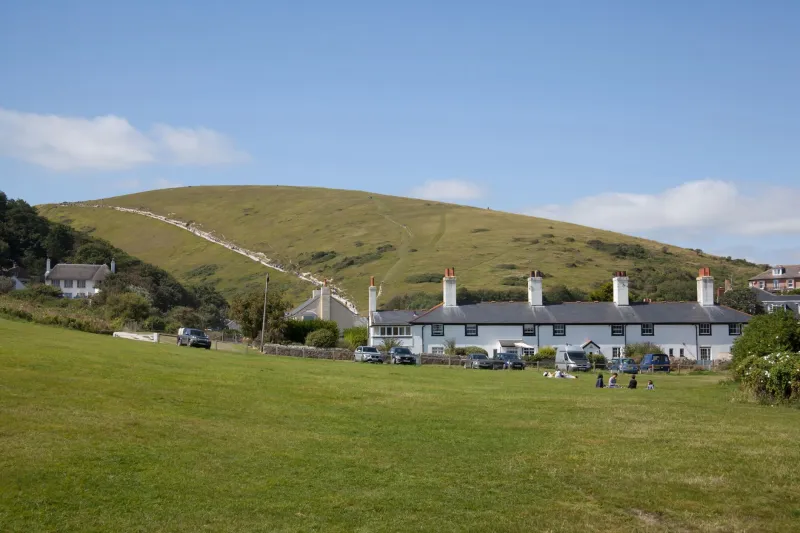
Margaret's village — she's asked us not to name it precisely, because as she puts it, "we've only just got the signal, we don't want the whole of Manchester moving in" — sits in a valley that might as well have been designed by someone with a grudge against radio waves. Two hills, thick stone buildings, and a mobile mast a full nine miles away as the crow flies. Average signal: none. Best case, standing in the churchyard with your arm up: one bar of 3G, sometimes.
The Turning Point
What changed things wasn't a network upgrade or a government announcement. It was a parish council meeting in January 2023, where a retired telecoms engineer named Colin stood up and said the four words that started everything: "Right. Let's fix this."
Colin's plan had three prongs, and it's a genuinely useful template for any community in a similar position.
Prong one: document everything. The village ran a two-week signal survey — a simple spreadsheet where every household logged signal strength at home, at work and on the road. "Networks can't argue with data," Colin says. "'The signal's rubbish' is an opinion. 'Forty-one of forty-six households have zero bars indoors' is evidence."
Prong two: spend wisely on hardware. Before the networks came to the party, the village took matters into its own hands. Several households installed signal boosters (legally, this is a grey area — Ofcom-approved consumer repeaters are fine, imported grey-market boosters are not), while others signed up for their network's femtocell-style solutions — small boxes that route calls over home broadband. EE and Vodafone both offer these, often free to customers with poor indoor coverage, and they transformed the worst-hit homes almost overnight.
Prong three: escalate, politely and relentlessly. Armed with the survey data, the parish council wrote to the networks, then to their MP, then lodged a formal coverage complaint with Ofcom. The key, Colin insists, was the tone: "We weren't angry. We were organised. Every letter had data attached. Every call referenced the previous letter." Within eight months, a network engineer had visited. Within eighteen, a new small cell had been installed on the village hall — funded through the Shared Rural Network programme, of which more in a moment.
What the Shared Rural Network Has Actually Done
The Shared Rural Network — the 2020 deal between government and the four major networks, promising 4G coverage to 95% of the UK landmass — has been genuinely slow-burning. Progress is real: hundreds of new masts have gone up, many in spots no single operator would have funded alone, since all four networks share the infrastructure. But the programme has slipped, with full delivery now expected well into the latter half of the decade, and blackspot maps still show glaring gaps across Scotland, Wales and northern England.
The lesson from Margaret's village is that the SRN works best when communities push. Priority sites get built first, and a well-documented, well-organised campaign — with an MP who's actually bothered — moves you up the list.
Your Blackspot Battle Plan
If this all sounds familiar, here's the condensed version of what worked:
- Survey your community. Two weeks, one spreadsheet, every household. Use Ofcom's Connected Nations data as supporting evidence.
- Fix indoors first. WiFi calling (free, check your handset supports it) and network femtocell units can solve the home-coverage problem immediately, even before any mast appears.
- Only use legal repeaters. Ofcom's licence-exempt consumer repeaters are fine; cheap imports that blast interference across the network will land you in trouble and give your campaign a bad name.
- Escalate in order: network complaint, then MP, then Ofcom. Attach data to everything.
- Get the parish council involved. Collective complaints carry weight that individual ones simply don't.
Margaret's shrine chair has been retired to the spare room. She still keeps it, she says, "as a reminder". The one spot by the window now has four bars — and she has the village WhatsApp group to prove it.