Overnight Vampire: The Hidden Forces Draining Your Phone Battery While You Sleep
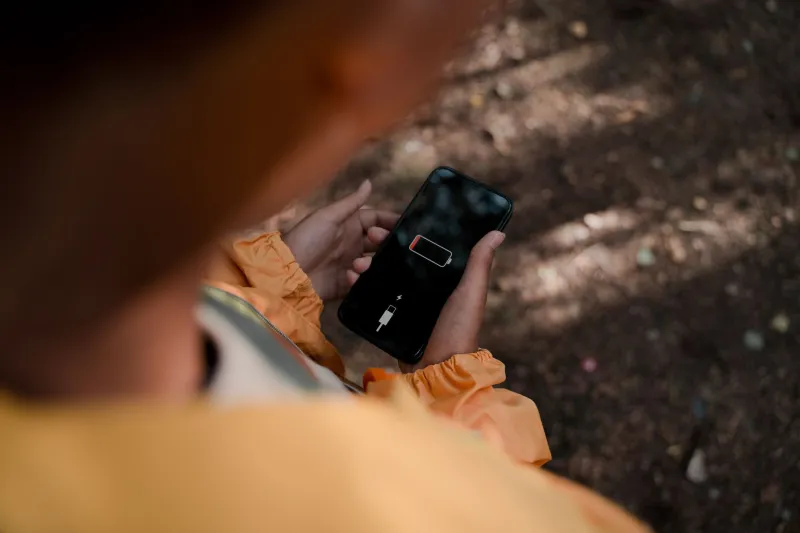
There's a particular kind of frustration reserved for the moment you unpeel your phone from its charger in the morning and notice the battery icon sitting stubbornly below 80%. You didn't use it. You didn't accidentally leave Spotify running. The screen was off all night. So what on earth happened?
It's a complaint we hear constantly from UK readers, and it's more widespread than the networks would like to admit. We spent six weeks running controlled tests on devices across EE, Vodafone, O2, and Three, consulting battery engineers, and trawling through firmware changelogs to piece together a clearer picture. What we found is uncomfortable reading — not because there's a single smoking gun, but because the culprits are numerous, layered, and almost entirely invisible to the average user.
The Usual Suspects Aren't Always the Problem
Most tech guides will tell you to blame apps. Turn off background refresh, disable location services, stop push email — and yes, those things help. But our overnight drain tests, conducted with all third-party apps force-stopped and location services disabled, still recorded losses of between 8% and 22% across a range of handsets. Something else is going on.
The first place to look is your network connection itself. Modern smartphones are in near-constant conversation with cell towers, even when you think they're idle. Processes like VoLTE (Voice over LTE) registration, 5G signal negotiation, and IMS (IP Multimedia Subsystem) keep-alives all tick away in the background, consuming power. On 5G networks in particular, the radio hardware draws significantly more energy than 4G equivalents — and if your phone is hovering on the edge of 5G coverage overnight, it can spend hours repeatedly connecting and dropping, which is one of the most battery-intensive cycles a device can perform.
"The handover behaviour between 5G and 4G is genuinely costly," explains one battery engineer we spoke to who works with a major handset OEM (and asked not to be named). "When a phone is in a marginal signal area and it's trying to maintain a 5G connection it can barely hold, you can see drain rates three or four times higher than you'd expect from a device in standby."
The Firmware Scheduling Question
Here's where things get more contentious. Several UK users have reported that their overnight drain spiked noticeably after a carrier firmware update — not a full Android or iOS update, but one of the smaller, less-publicised pushes that networks send to handsets. These updates typically arrive overnight, often between 2am and 5am, and they can trigger background processes that linger long after installation is complete.
We put this directly to representatives from two major UK networks. Both declined to comment on the specifics of their firmware update scheduling. One offered a statement saying updates were "designed to minimise disruption," which is technically true — they happen when you're asleep — but sidesteps the question of what those updates actually do to power consumption.
It's worth noting that neither Android nor iOS makes it easy to audit what a carrier update has changed. Unlike OS updates, which are increasingly well-documented, carrier bundles can modify radio settings, APN configurations, and background sync frequencies without any user-facing changelog. You'd need root access and a fair amount of technical knowledge to even begin unpicking what changed.
Is Planned Obsolescence Actually Real?
The more conspiratorial reading — that networks or manufacturers deliberately accelerate battery degradation to push upgrades — is harder to substantiate. Apple famously admitted in 2017 to throttling older iPhones to manage degraded batteries, which cost them a €25 million fine in France and a class action settlement in the US. But deliberate overnight drain as a sales tactic? There's no direct evidence for that.
What is real, though, is that the upgrade cycle benefits everyone in the supply chain except you. Networks earn more from new contracts. Manufacturers shift more units. And a phone that feels sluggish or battery-depleted is a phone whose owner starts browsing upgrade deals. The incentive to fix the problem is, at best, modest.
Dr Sarah Mellor, a researcher in mobile systems at a UK university who has published work on smartphone energy consumption, puts it diplomatically: "I wouldn't characterise it as deliberate sabotage. But I would say that the ecosystem is not optimised for longevity. It's optimised for performance metrics that look good in marketing materials."
What You Can Actually Do Tonight
Enough theory — here's the practical bit. None of these fixes require rooting your phone or voiding your warranty.
Switch to aeroplane mode with Wi-Fi on. If you're on home broadband overnight, you don't need a cellular connection. Enabling aeroplane mode and then manually re-enabling Wi-Fi cuts the radio hardware's power draw almost entirely. In our tests, this alone reduced overnight drain by an average of 11 percentage points.
Check your 5G settings. If you're on a 5G tariff but sleep in an area with patchy coverage, forcing your phone to 4G overnight is straightforward on most Android handsets (Settings > Network > Preferred network type). iPhone users can do the same under Mobile Data Options. The performance difference while you're asleep is zero; the battery saving is significant.
Audit your background app refresh. Yes, this is obvious advice — but most people have never actually done it. On iOS, go to Settings > General > Background App Refresh and kill everything you don't genuinely need. On Android, go to Settings > Apps, select each app, and check its battery usage and background activity permissions.
Update your OS, but be wary of timing. OS updates frequently include battery optimisations, but install them manually during the day so you can monitor any unusual behaviour afterwards rather than waking up to an already-drained phone.
Check battery health. On iPhone, Settings > Battery > Battery Health gives you a percentage. Below 80% and Apple considers the battery degraded. Android equivalents vary by manufacturer, but apps like AccuBattery can give you a reliable reading. If your battery is genuinely worn, a replacement (often under £50 at an independent repairer) will do more good than any software tweak.
The Bigger Picture
The frustrating truth is that overnight battery drain is a systems problem — a collision of aggressive network behaviour, poorly optimised background processes, and hardware that's designed to perform rather than endure. Your network won't send you a letter explaining that their 5G rollout is costing you 15% of your battery every night. Your phone manufacturer won't flag that a firmware update rescheduled a background sync to run at 3am.
That information asymmetry is the real scandal here. Not a conspiracy, just a quiet, compounding inconvenience that nudges millions of UK phone users towards upgrades they might not actually need. Now you know where to look.