Break It, Buy It? Why Smartphone Repairs Are Broken — And the Fight to Fix Them
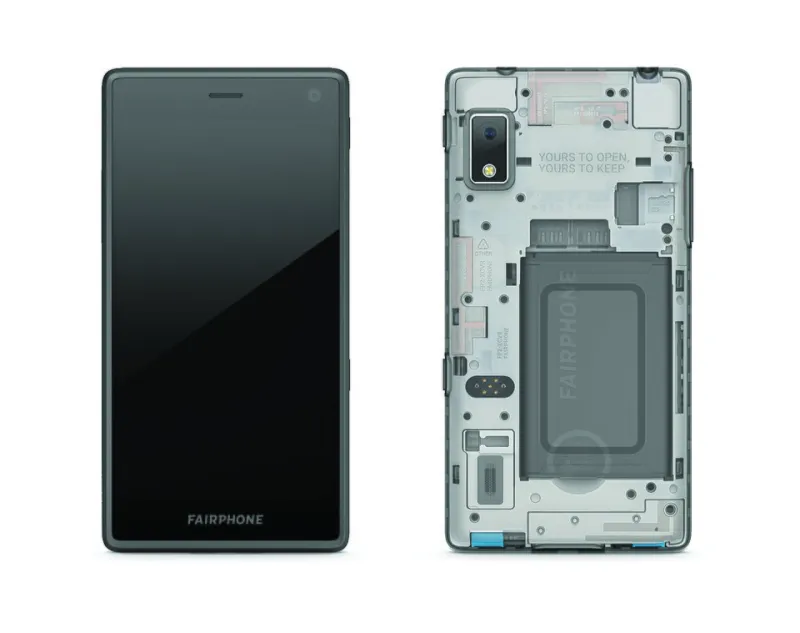
Photo: Fairphone, CC BY-SA 2.0, via Wikimedia Commons
Drop your phone. Watch it bounce. Feel the dread. Flip it over. There it is: a web of cracks spreading across the screen like a tiny, expensive spiderweb. It's a moment almost every British smartphone owner has experienced, and what follows is a uniquely modern form of consumer despair — not because the phone is broken, but because you're about to discover just how much it costs to fix it.
The repair market for smartphones in the UK is, to put it diplomatically, a mess. Prices are opaque, quality is inconsistent, manufacturers actively obstruct independent repairers, and the cheapest option is frequently just to buy a new device. That last point is not accidental.
The Numbers That Make Your Eyes Water
Let's start with some specifics, because the abstract outrage only lands when you see the actual figures.
An official Apple screen replacement for an iPhone 15 Pro Max without AppleCare+ will set you back £379 at an Apple Store or authorised service provider. The iPhone 15 standard model is cheaper at £249, but still a significant chunk of the original purchase price. A new iPhone 15 (refurbished, Grade A) can be found on sites like Music Magpie for around £550. The maths is genuinely alarming.
Samsung's official repair costs are similarly eyebrow-raising. A Galaxy S24 Ultra screen replacement through Samsung's own service costs approximately £299. A battery replacement for the same device is around £79 — not catastrophic, but hardly trivial for what is, mechanically speaking, a relatively simple job.
Third-party repairers offer substantially lower prices. A reputable independent shop in most UK cities will replace an iPhone 15 screen for between £80 and £140, depending on whether they use original Apple parts, aftermarket OEM-equivalent panels, or budget alternatives. Samsung screen replacements at independents typically run £60–£120 for mid-range models.
The catch? Until very recently, using a non-Apple part on an iPhone triggered software warnings, disabled Face ID in some cases, and in certain scenarios caused the phone to refuse to function at all — a practice critics called "parts pairing," and which Apple defended as a security and quality measure. Campaigners called it something less polite.
The Parts Pairing Problem
Parts pairing is arguably the most technically sophisticated form of repair obstruction ever devised. It works like this: manufacturers programme their devices to verify that key components — screens, cameras, batteries, even charging ports — carry a cryptographic signature matching the original device's serial number. Swap in an uncertified part, and the phone knows. The consequences range from warning messages to outright functional lockouts.
Apple has faced the most scrutiny over this practice, though Samsung, Google, and several Chinese manufacturers employ similar techniques to varying degrees. In 2023, following sustained pressure from US right-to-repair advocates and the threat of legislation in several states, Apple announced it would allow "used genuine Apple parts" to be paired to devices — a partial concession that independent repairers described as a step forward wrapped in new complications.
In the UK, the pressure has come from a different direction: Europe.
What the Right-to-Repair Legislation Actually Says
The EU's Right to Repair Directive, which came into force in 2024, requires manufacturers to make spare parts, repair tools, and technical information available to independent repairers at reasonable prices. It also prohibits manufacturers from using software or hardware techniques to obstruct repairs — a direct shot at parts pairing.
Here's the complicated bit for UK readers: post-Brexit Britain is not bound by EU directives. However, the UK government has been developing its own Product Security and Telecommunications Infrastructure framework, and in 2021 introduced right-to-repair regulations covering white goods — washing machines, fridges, dishwashers. Smartphones were notably absent.
That omission has become a political pressure point. A coalition of consumer groups, independent repairers, and environmental campaigners — including the Restart Project, a London-based repair advocacy organisation — has been lobbying for smartphones to be included in updated regulations. Progress has been slow but not entirely absent. The government's Product Regulation and Metrology Bill, currently working through Parliament, contains provisions that could be used to extend repair obligations to consumer electronics, including phones.
The irony is that UK manufacturers selling into EU markets are already having to comply with European repair standards for those products. The same Samsung phone sold in Germany must have accessible spare parts; the same phone sold in Glasgow has no such guarantee.
Case Studies: What Common Repairs Actually Cost
The Cracked Screen (iPhone 14, Bristol) Sarah, a 34-year-old teacher, cracked her iPhone 14 screen in January 2024. Apple quoted her £249 for an official replacement. A local independent repairer offered the same job for £95 using an OEM-equivalent screen. She went with the independent. The repair took 45 minutes. Six months later, the screen is performing perfectly. "I just couldn't justify paying Apple's price when the phone was already 18 months old," she told us.
The Dead Battery (Samsung Galaxy A54, Leeds) Marcus, a 28-year-old graphic designer, noticed his Galaxy A54 barely lasting half a day by its second birthday. Samsung's authorised service quoted £69. A local repairer offered £35. He chose the independent, and reports his phone now easily lasts a full day again. "It felt like buying a new phone without the contract," he said.
The Broken Charging Port (Google Pixel 7, London) This one is more cautionary. Priya, a 41-year-old solicitor, had her Pixel 7's USB-C port repaired by an independent repairer she found through a quick Google search. The repair cost £45. Within three weeks, the port failed again. A second independent repairer fixed it properly for £55. "I should have checked reviews more carefully," she acknowledged. "Not all independents are equal."
How to Navigate the Repair Landscape
If you're facing a repair bill, here's how to approach it sensibly:
-
Get three quotes. Don't accept the first price you're given, whether that's from the manufacturer or an independent. Prices vary enormously.
-
Check the Repairer's credentials. Look for repairers accredited by Trusted Traders, Which? Endorsed, or with verifiable Google/Trustpilot reviews. The Restart Project also maintains a directory of community repair events across the UK.
-
Ask about parts. A good repairer will tell you exactly what parts they're using — original manufacturer, OEM-equivalent, or budget aftermarket. Each has different quality and longevity implications.
-
Consider your insurance. Many home contents insurance policies cover accidental damage to mobile phones. Check yours before reaching for your wallet.
-
Factor in the phone's age. If your device is more than four years old and facing a major repair, the calculus shifts. A refurbished replacement may genuinely make more financial sense — though that decision should be yours to make freely, not forced by artificially inflated repair costs.
The Bigger Picture
Right-to-repair isn't just about saving money on a cracked screen, as significant as that is. It's about the environmental cost of a culture that replaces rather than fixes. The UK generates approximately 1.5 million tonnes of electronic waste annually, and smartphones are a significant contributor. Every device repaired is one fewer in a landfill or a "recycling" facility that may or may not do what it claims.
Manufacturers have a commercial interest in making repair difficult and replacement attractive. Legislation is the only realistic counterweight to that incentive. The EU has moved. The UK is moving, slowly. In the meantime, British consumers are left navigating a repair market that is improving — but not fast enough, and not fairly enough.
Your phone is fixable. It just shouldn't cost this much to prove it.