Doctor in Your Pocket: How Smartphone-Powered Microchips Could Bring Lab-Grade Diagnostics Home

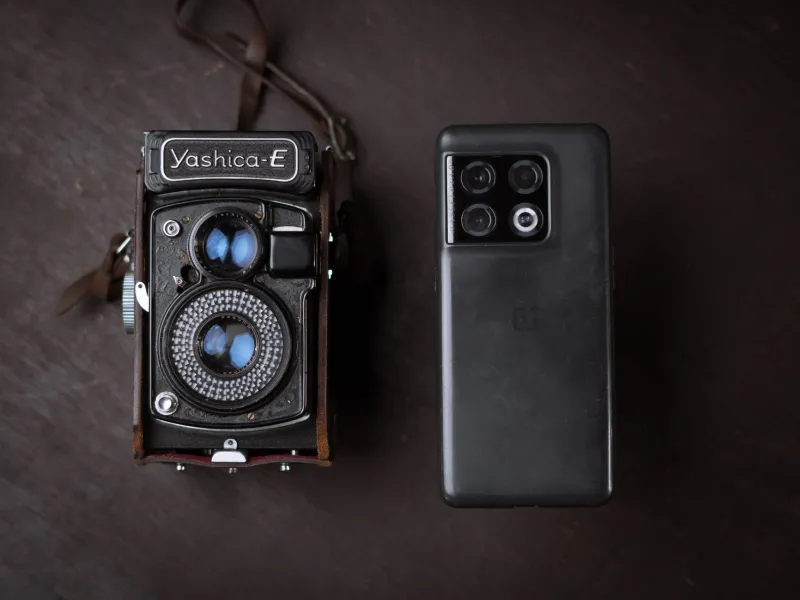
Photo by Photo by Brecht Corbeel on Unsplash on Unsplash
Your phone already tells you how many steps you've done, how badly you slept and whether your heart rate spiked when the in-laws turned up unannounced. Now it might soon be able to tell you whether that sore throat is worth a trip to the chemist — thanks to a new microchip that turns a humble smartphone into a fully-fledged medical diagnostic device.
What Is This Microchip, Then?
The concept is deceptively simple. Researchers have developed a microchip — roughly the size of a fingernail — that connects to a smartphone and reads the results of diagnostic tests using the phone's own camera and processing power. Instead of sending a sample off to a lab and waiting days for a letter, the chip analyses it on the spot, displaying results on your phone screen within minutes.
The trick is in the optics. The chip amplifies the signals from a test sample — think lateral-flow-style assays, similar in principle to the Covid tests we all got far too familiar with — and the phone's camera does the rest. What would normally require expensive lab equipment gets squeezed into something that piggybacks on the device already sitting in your pocket.
Why Your Phone Is the Perfect Lab Partner
There's a reason the smartphone is the star of the show rather than just a convenient screen. Modern phones pack genuinely impressive cameras, powerful processors and constant connectivity — three things a diagnostic device needs. The chip handles the sample; the phone handles the analysis, the display and, crucially, the data.
That last part matters more than you'd think. Results can be logged, tracked over time and shared with a GP or practice nurse with a couple of taps. For anyone managing a long-term condition — diabetes, thyroid issues, kidney function — that's the difference between keeping a dog-eared notebook and having a proper record your doctor can actually use.
The British Context: Why This Matters Here
Anyone who's tried to get a routine GP appointment recently will understand the appeal. The 8am scramble for a slot has become a national sport, and simple diagnostic tests — the kind that rule things out rather than treat anything — are exactly the appointments that clog up the system.
At-home testing isn't entirely new to Britain. We already have home blood pressure monitors, blood glucose kits and postal cholesterol tests from the likes of Thriva and Medichecks. But those typically involve posting a sample off and waiting. The smartphone microchip model promises something different: results while-you-wait, with lab-grade accuracy, at a fraction of the cost of traditional testing.
For rural households — and we've covered the rural connectivity battle plenty on this site — there's a real benefit too. If you're an hour's drive from your nearest practice, a device that can flag whether a symptom needs urgent attention or a paracetamol and a good night's sleep is genuinely life-changing.
The Catch: Trust, Regulation and the Data Question
Before we all bin our GP appointments, some healthy scepticism is warranted. First, accuracy. A chip that occasionally gives a false negative is more dangerous than no chip at all, and any device of this kind will need to clear the MHRA's medical device regulations before it can be sold in the UK. That process exists for good reason.
Second, data. A diagnostic device connected to your phone is collecting health information, and health information is the most sensitive data there is. Where does it go? Is it sold to insurers? Will your premiums quietly creep up because an app noticed your cholesterol trending the wrong way? Any manufacturer hoping to convince British consumers will need to answer those questions clearly — and GDPR gives UK users strong rights here, but the burden of understanding still falls on us.
Third, there's the human element. Home testing is brilliant for monitoring and triage, but it's not a diagnosis. A chip can tell you a marker is elevated; it can't tell you why, or what to do about it. The sensible future is one where these devices work alongside the NHS rather than replacing it — flagging issues early so the actual appointment, when you get one, is more useful.
When Can You Actually Buy One?
That's the million-pound question, and the honest answer is: not immediately. Medical devices face a longer road to market than your average gadget, and rightly so. Early applications are likely to be professional-first — clinics, pharmacies and care homes — before consumer versions follow. Think of it like the blood pressure monitor: hospital kit first, Boots shelf second.
What's not in doubt is the direction of travel. The smartphone has already eaten the camera, the satnav, the torch and the Walkman. The diagnostic lab looks like the next thing on the menu. And given how much time Brits already spend prodding at their phones, at least this particular screen-time habit might actually be good for you.