The £20-a-Month Mystery: How Britain's Landline Legacy Quietly Empties Your Wallet

The £20-a-Month Mystery: How Britain's Landline Legacy Quietly Empties Your Wallet
There's a peculiar sound echoing through millions of British homes—the silence of a landline that never rings. Yet week after week, month after month, households across the UK continue paying for these phantom connections, often without realising they're funding a technology they've long since abandoned.
The Scale of Britain's Silent Subsidy
Recent Ofcom data reveals a staggering truth: whilst landline usage has plummeted by 85% over the past decade, nearly 60% of UK households still maintain active fixed-line services. The maths is brutal—families are collectively spending over £2 billion annually on phone lines that gather dust whilst their mobiles handle every call, text, and video chat.
The culprit isn't nostalgia or necessity—it's the bundle. Telecoms giants have masterfully woven landline rental into broadband packages, making it nearly impossible to separate the services. BT, Sky, Virgin Media, and others present these combinations as 'value deals', but scratch beneath the surface and you'll find a different story.
The Bundle Trap That Won't Release
Take Sarah from Manchester, who discovered she'd been paying £18.99 monthly for line rental on a phone she hadn't used since 2019. When she contacted BT to remove the landline, she was told her broadband-only option would actually cost £3 more per month. The mathematics make no sense until you realise the psychological game at play.
Providers have structured their pricing to make broadband-only deals appear expensive whilst landline bundles seem like bargains. It's a clever accounting trick that keeps millions locked into paying for services they've mentally discarded.
The 2025 Deadline That Changes Everything
Here's where things get interesting. The traditional landline network—the Public Switched Telephone Network (PSTN)—is being switched off across the UK by December 2025. This isn't a gradual phase-out; it's a hard stop that will render millions of existing landline phones useless overnight.
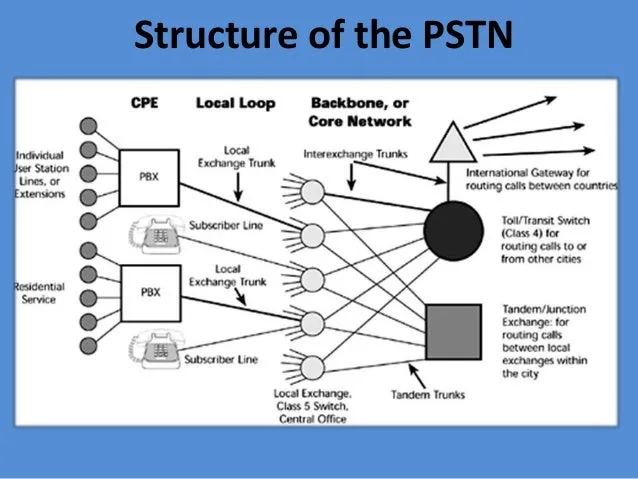 Photo: Public Switched Telephone Network, via image.slidesharecdn.com
Providers are quietly migrating customers to Voice over Internet Protocol (VoIP) services, which route calls through your broadband connection rather than copper wires. The catch? You're still paying the same monthly rental for what's essentially become a software feature.
Your Legal Right to Escape
Contrary to what customer service representatives might suggest, you do have options. Under Ofcom regulations, providers cannot force you to pay for services you don't want, but they've become expert at making alternatives financially unattractive.
The key is understanding your contract terms. If you're mid-contract and your provider switches you from PSTN to VoIP without reducing costs, this constitutes a 'material change' that may give you grounds to exit penalty-free. Several consumer groups have successfully challenged these transitions, arguing that customers shouldn't pay legacy prices for digital services.
The Mobile-Only Reality Check
For most British households, going fully mobile isn't just possible—it's already happening. The average UK adult makes fewer than two landline calls per month, and 78% of homes report using mobiles exclusively for voice communication.
The concerns about emergency services are largely outdated. Modern mobile networks provide location data to emergency operators, often more accurately than fixed lines. Battery backup systems for home broadband can maintain connectivity during power cuts, addressing the traditional landline reliability argument.
How to Audit Your Bills and Break Free
Start by examining your last three months of bills. Look for 'line rental', 'phone line', or similar charges—these often appear as separate items even within bundle pricing. Calculate the annual cost; you might be shocked.
Next, contact your provider and specifically ask for broadband-only pricing. Don't accept the first quote—speak to the cancellations department, which often has access to better deals. If they claim broadband-only costs more, ask for the breakdown in writing.
Consider switching providers entirely. Several smaller ISPs offer genuine broadband-only services at competitive rates. Hyperoptic, Community Fibre, and some regional providers have built their business models around customers who want internet without the landline baggage.
The Future of Fixed-Line Communications
As the PSTN switch-off approaches, the landline rental model becomes increasingly difficult to justify. Progressive providers are already offering VoIP calling as a free add-on rather than a chargeable service, recognising that voice communication has become a commodity feature rather than a premium service.
The transition presents an opportunity for consumers to reassess their telecommunications needs. With mobile coverage improving and home broadband becoming more reliable, the traditional justifications for maintaining a fixed line have largely evaporated.
Taking Action Before December 2025
The PSTN switch-off deadline creates a natural break point for renegotiating your telecommunications setup. Use this transition period to your advantage—providers are more likely to offer flexible terms when they're managing large-scale infrastructure changes.
Document your current usage patterns, calculate the true cost of your landline rental, and approach your provider with specific alternatives in mind. The worst they can do is say no, but the potential savings make the conversation worthwhile.
For millions of UK households, the landline has become an expensive ghost—a monthly charge for a service that exists in name only. As Britain moves towards a fully digital telecommunications future, now might be the perfect time to finally let this phantom rest in peace.