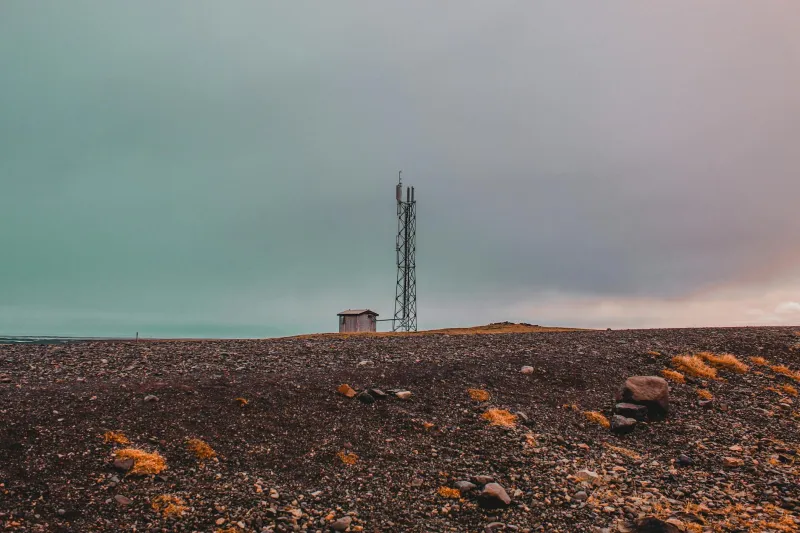
The Great 5G Postcode Lottery
Walk down any high street in Manchester or Birmingham, and your phone will likely display that coveted '5G' symbol. But venture into the rolling hills of mid-Wales, the Scottish Highlands, or even parts of rural Kent, and you might struggle to get a decent 4G signal, let alone the next-generation connectivity that's supposed to revolutionise how we live and work.
Three years after the UK's major networks began their 5G rollouts with great fanfare, the reality on the ground tells a different story. Whilst operators boast about covering 'over 50% of the population', this figure masks a stark truth: if you don't live in a major urban centre, you're probably still waiting.
The Forgotten Communities
Our investigation has identified dozens of communities across Britain where residents report patchy or non-existent mobile coverage, despite living just miles from areas with full 5G connectivity. Take Llanfairpwll in Anglesey, where local councillor Megan Davies tells us: "We've got tourists coming here expecting to share their photos instantly, but they can barely send a text message. It's embarrassing."
Similar stories emerge from the Cotswolds, where picture-postcard villages like Chipping Campden struggle with dead zones that make working from home a nightmare for residents who moved there during the pandemic. "I've got colleagues in London getting gigabit 5G speeds whilst I'm lucky if my video calls don't drop out," explains Sarah Mitchell, a marketing consultant who relocated from Birmingham in 2021.
The problem isn't limited to traditionally remote areas either. Parts of the Home Counties, including sections of the Surrey Hills and areas around Dorking, report inconsistent coverage that leaves commuters frustrated and businesses struggling to operate efficiently.
Following the Money Trail
The root of this digital divide lies in cold, hard economics. Mobile network operators naturally prioritise areas where they'll see the fastest return on investment – dense urban areas where a single mast can serve thousands of potential customers. Rural communities, where the same investment might serve just hundreds of people spread across a much larger area, inevitably fall down the priority list.
EE, Vodafone, Three, and O2 all maintain they're committed to improving rural coverage, but their rollout strategies tell a different story. Internal documents suggest that many rural areas won't see meaningful 5G coverage until at least 2026, despite government targets calling for 95% geographic coverage by 2027.
"The business case for rural 5G simply doesn't stack up in the short term," admits one network executive who spoke on condition of anonymity. "We're being asked to spend millions connecting communities that might generate thousands in revenue."
Government Promises vs Reality
The government's ambitious connectivity agenda, outlined in various white papers and ministerial speeches, promised to "level up" digital access across the UK. The £5 billion Project Gigabit and the Shared Rural Network initiative were supposed to eliminate not-spots and ensure everyone could access fast, reliable mobile internet.
Yet Ofcom's latest data shows that 8% of the UK's landmass still lacks reliable 4G coverage from all four networks, whilst 5G coverage remains virtually non-existent outside major population centres. The regulator's own mapping tool reveals vast swathes of Britain where the newest mobile technology remains a distant prospect.
Local Fightback
Frustrated by years of broken promises, some communities are taking matters into their own hands. Parish councils across rural Britain are clubbing together to commission independent coverage surveys and lobby for better service. In the Peak District, a coalition of villages has even explored the possibility of creating their own small-cell network using alternative providers.
"We can't wait for the big networks to decide we're worth serving," says Tom Harrison, chairman of the Derbyshire Digital Action Group. "If they won't invest in our communities, we need to find other solutions."
Some areas have found success by working directly with network operators to identify optimal mast locations and smooth planning processes. The village of Crickhowell in Powys became one of the first rural communities in Wales to establish its own broadband network, and is now exploring similar initiatives for mobile coverage.
The Real-World Impact
Poor mobile coverage isn't just an inconvenience – it's becoming a barrier to economic participation and social inclusion. Rural businesses report losing customers who can't process card payments or access online services. Emergency services face delays when trying to coordinate responses in areas with patchy coverage.
The pandemic highlighted these inequalities starkly. Whilst urban areas adapted to remote working and digital services, many rural communities found themselves increasingly isolated by their poor connectivity. Students struggled with online learning, elderly residents couldn't access telehealth services, and local businesses lost ground to competitors in better-connected areas.
What Needs to Change
Experts argue that addressing Britain's 5G divide will require a fundamental shift in approach. Rather than relying purely on market forces, the government may need to intervene more directly – potentially through subsidies for rural deployment or infrastructure sharing requirements.
"We need to treat mobile connectivity like we treat roads or water supply," argues Professor Jane Roberts from the University of Edinburgh's digital policy institute. "It's essential infrastructure that everyone deserves access to, regardless of where they live."
The clock is ticking. As digital services become increasingly central to daily life, the communities still waiting for reliable 5G risk being left further behind. For the residents of Britain's not-spots, the promise of next-generation connectivity feels increasingly hollow – a reminder that in the race to build tomorrow's digital infrastructure, geography still determines destiny.
Until the economics change or the government steps in with more decisive action, Britain's digital divide looks set to persist, leaving thousands of communities quite literally disconnected from the connected future we're all supposed to share.